
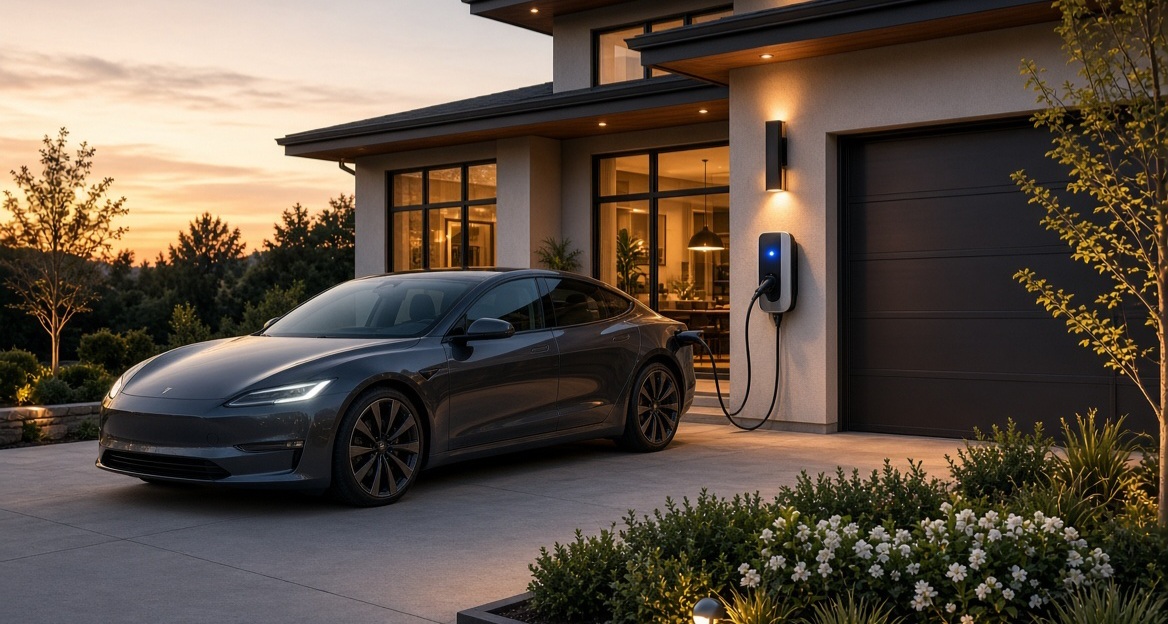
Discover the best home EV chargers in the USA for 2026. Compare top Level 2 models like ChargePoint Home Flex, Emporia, Tesla Wall Connector & Grizzl-E for fast, smart, reliable charging.
Buying a home EV charger is about matching the EVSE to your vehicle, electrical service, parking location, connector, and charging routine. A well-chosen Level 2 charger can replenish most overnight driving needs, while a poorly matched unit can add unnecessary installation cost.
This guide evaluates leading products using manufacturer-published specifications, stated warranties, connector options, safety information, installation flexibility, smart features, and observed list prices as of August 31, 2026. It does not claim hands-on testing. Prices and stock status can change, and the vehicle’s onboard AC charger may limit charging speed below the EVSE’s maximum.
Our picks
Best overall: ChargePoint Home Flex
ChargePoint Home Flex is the most broadly useful recommendation for a typical U.S. household because it combines a high output ceiling with multiple installation and connector configurations. The hardwired version can be configured for circuits rated from 20A to 80A and can deliver up to 50A, while the NEMA 6-50 and NEMA 14-50 versions deliver up to 40A on compatible circuits. ChargePoint offers both J1772 and NACS versions, making the product relevant to mixed-brand households and buyers planning for a future EV change.
The ChargePoint app supports home and public charging, schedules, and usage oversight. ChargePoint lists Home Flex as UL Listed, ENERGY STAR certified, and covered by a three-year warranty. Plug-in models do not reach the hardwired model’s 50A ceiling, so choose the configuration your electrician can safely provide. Home Flex suits buyers who value flexibility and a mature app ecosystem.
Best smart charger and energy-management value: Emporia Classic
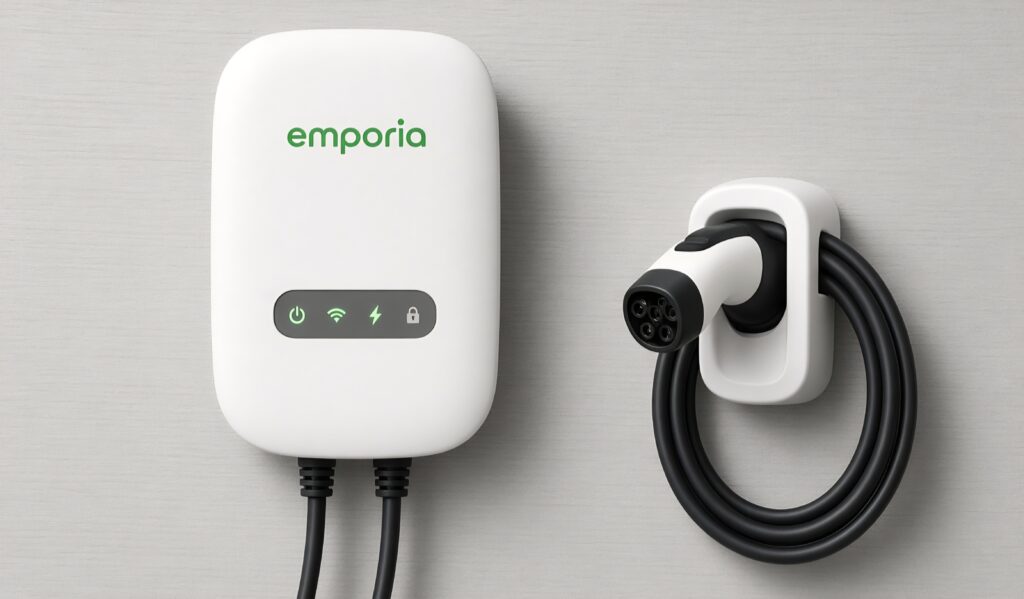
Emporia Classic is a strong choice for owners who care about charging schedules, cost visibility, and home-energy integration without moving to a premium-priced charger. Emporia lists the Classic from $449, with up to 48A, a 25-foot cable, NEMA plug or hardwired installation, a three-year warranty, and NEMA 4 outdoor protection. It is offered in separate J1772 and NACS versions rather than as one universal cable.
The Emporia app can schedule charging and show charging cost and energy use. Solar and more advanced load-management functions are tied to Emporia’s broader energy-monitoring ecosystem, so buyers should budget for any required accessories rather than assuming every feature is included. Emporia says the Classic is ENERGY STAR certified and UL listed. It is particularly attractive for a homeowner who already uses Emporia energy equipment or wants detailed household-energy data.
Best budget pick: Grizzl-E Classic Connect
The Grizzl-E Classic Connect 40A is a compelling value-oriented option when a household wants a durable plug-in Level 2 EVSE rather than the most elaborate app. The official U.S. site lists it at $349.99, describes it as a 40A plug-in charger, and offers J1772 or NACS output-cable versions.
Its appeal is a simple installation path when a suitable 240V receptacle exists and a rugged outdoor-oriented enclosure. Check the exact model page for warranty and certification details. Select it when price, portability, and weather resistance matter more than maximum amperage or advanced energy management.
Best for Tesla owners: Tesla Universal Wall Connector
Tesla’s Universal Wall Connector is the cleanest choice for a Tesla owner who also wants to charge a non-Tesla EV. The unit combines a Tesla connector with an integrated J1772 adapter, and Tesla lists up to 48A/11.5 kW, a 24-foot cable, Wi-Fi, Tesla-app scheduling and usage management, indoor/outdoor installation, and a four-year residential warranty.
There is an important availability caveat: on the research date, Tesla’s shop listed the $600 product as out of stock and said Tesla ownership was required while supplies were limited. That means it should not be treated as a universally available recommendation. Tesla also notes that some Model 3 and Model Y configurations are limited to 32A/7.7 kW, illustrating why the charger’s maximum is not the same as the vehicle’s actual charging rate.
Best compact NACS option: Wallbox Pulsar Plus NACS
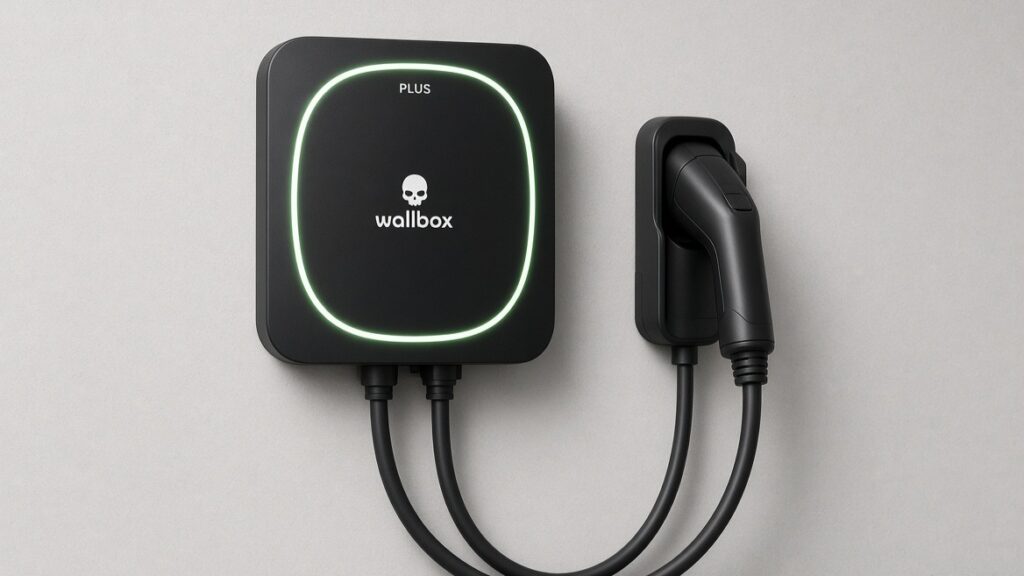
Wallbox Pulsar Plus NACS is worth considering when a buyer wants a compact, connected charger with a native NACS cable. The official store lists 40A and 48A versions, a 25-foot cable, indoor/outdoor use, Wi-Fi and Bluetooth, app controls, and a three-year warranty. It lists the product from $649.99 and states that solar charging and dynamic load management require a Power Meter.
Wallbox also lists UL and ENERGY STAR certification for the product. The Pulsar Plus NACS makes the most sense for a Tesla or other NACS vehicle when a native NACS cable is preferred and the buyer is willing to pay more than for a basic 40A charger. Verify the exact amperage, plug, and included accessories because the 40A plug-in configuration differs from the 48A configuration.
Best heavy-duty or outdoor option: Grizzl-E Ultimate
For a homeowner prioritizing a robust enclosure and high output, Grizzl-E’s Ultimate range deserves attention. The official site lists the Ultimate 48A at 11.5 kW and $479.99, and the Ultimate 80A at 19.2 kW and $899.99; the 80A model is listed with J1772 or NACS output options.
The 80A version is not automatically the best choice. It requires a substantial electrical installation, a vehicle capable of accepting that AC rate, and careful service-load evaluation. In many homes, a 40A or 48A charger already replenishes a full night’s driving. Buy the Ultimate 80A only when the vehicle, electrical service, and long-term use case justify its capacity.
Best portable plug-in option: Grizzl-E Mini Connect
The Grizzl-E Mini Connect is designed for buyers who value a smaller, portable form factor. The manufacturer lists it at $479.99 and describes it as a portable 40A charger with an indoor/outdoor-rated NEMA 4 cast-aluminum enclosure. Portability can be useful for a second residence or a household that may move the EVSE between suitable outlets, but it does not eliminate the need for properly installed, correctly rated circuits. Do not use extension cords or improvised adapters in place of an appropriate installation.
What is a Level 2 EV charger?
A Level 2 home EV charger uses a 240V circuit rather than the 120V circuit used by a standard household outlet. ENERGY STAR gives typical Level 1 charging as approximately 2–5 miles of range per hour and typical Level 2 charging as approximately 10–20 miles per hour, although results vary with the vehicle, weather, battery state, and charging losses.
Technically, the wall-mounted unit is an EVSE, or electric vehicle supply equipment. The car’s onboard AC charger converts incoming AC power for the battery. Therefore, a 48A EVSE cannot force 48A into a vehicle whose onboard charger accepts less.
How fast are 32A, 40A, 48A, 60A, and 80A chargers?
Approximate electrical output can be estimated as amperage multiplied by 240V: 32A is about 7.7 kW, 40A about 9.6 kW, 48A about 11.5 kW, 60A about 14.4 kW, and 80A about 19.2 kW. These are nominal outputs, not guaranteed miles per hour. Charging speed depends on the EV, battery temperature, state of charge, and installation.
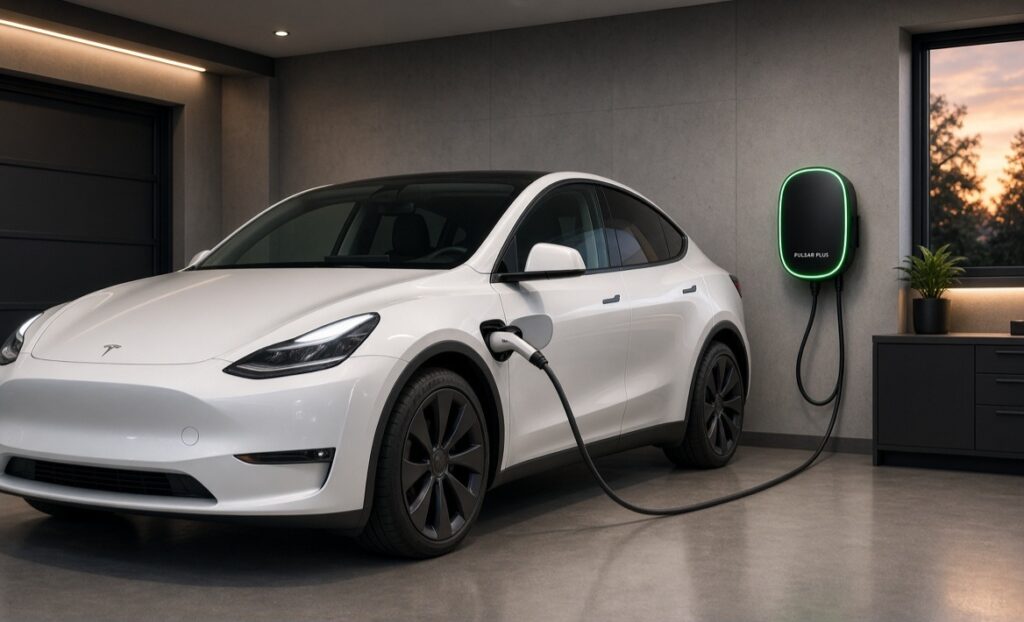
A continuous EV load is commonly designed around 80% of a circuit’s rating under the applicable electrical rules. In practical terms, a 48A continuous load generally requires a 60A circuit, while an 80A charger requires a much larger circuit and may not be feasible in an existing home. Have a licensed electrician verify the panel, conductors, breaker, disconnecting means, grounding, receptacle, and local permit requirements.
NACS versus J1772
J1772 has long been the common AC connector for non-Tesla EVs in North America. NACS is Tesla’s connector design, increasingly used by automakers and charger manufacturers. Compatibility is determined by both the vehicle inlet and the charger cable. A J1772 charger can serve a Tesla with the appropriate vehicle-side adapter, while a native NACS charger is the simpler match for an EV with a NACS inlet.
In 2026, the best connector choice is usually the one that matches the vehicle you own and the vehicles you are most likely to own next. A mixed household may prefer a J1772 unit plus a vehicle adapter or a charger with the appropriate cable option. Do not assume that every adapter supports every charging situation; follow the vehicle and charger manufacturers’ compatibility guidance.
Plug-in versus hardwired installation
Plug-in chargers can be moved more easily and may be convenient when a correctly rated NEMA 14-50 or 6-50 receptacle already exists. They are often limited to lower amperage than the same charger hardwired, and receptacles used continuously should be installed and inspected for that duty.
Hardwired chargers are generally preferable for a permanent outdoor installation, can support higher output on compatible models, and avoid a high-current plug-and-receptacle connection. They require more permanent electrical work. The right choice depends on location, desired output, future flexibility, and the electrician’s assessment.
How much does EV charger installation cost?
Installation pricing varies significantly. Cost drivers include panel-to-charger distance, conduit, wire, breaker requirements, location, trenching, permits, service capacity, and panel or load-management upgrades. Obtain an itemized quote separating hardware, labor, permits, and upgrades.
How many amps do you need?
For many drivers, 32A to 40A is sufficient for overnight charging. A 48A charger is a sensible middle ground if the vehicle supports it and the home can accommodate the circuit. A 60A or 80A EVSE is mainly for vehicles with higher AC acceptance, unusually high daily mileage, or a justified future-proofing plan. More amperage does not make a vehicle charge faster than its onboard charger allows.
Can you install an EV charger yourself?
A homeowner may be able to mount equipment or connect a plug-in EVSE under local rules, but adding a circuit, installing a receptacle, changing panel wiring, or hardwiring a charger involves electrical hazards and code requirements. ENERGY STAR recommends having a licensed electrician assess whether the home wiring, outlet, and other hardware can support the charger. Permits, inspections, GFCI requirements, grounding, and local rules vary. Avoid DIY work that could create shock, fire, or equipment risks.
Smart EV charger features worth paying for
Smart features are most valuable when they solve a specific problem. Scheduling can shift charging to lower-cost utility hours, while energy monitoring shows session costs. Wi-Fi enables remote control and firmware updates. Load management may reduce the need for a service upgrade, but can require an accessory. Solar integration should be evaluated against the charger’s ecosystem and utility rules.
EV charger safety checklist
Choose equipment with credible safety certification, such as UL listing or another recognized testing mark, and confirm the exact model rather than relying only on a retailer listing. ENERGY STAR notes that certified chargers are tested for safety by a nationally recognized testing laboratory.[6] Use the circuit and settings specified by the manufacturer and electrician. Outdoor installations need equipment rated for the environment, appropriate cable management, and protection from physical damage and water intrusion. Never substitute an extension cord for a proper EV charging installation.
Ways to reduce charging costs
The cheapest charging time may be overnight under a utility time-of-use plan, but rates and program rules differ by location. Check your utility’s EV program, demand-response offering, and charger-rebate requirements before buying; some programs require an ENERGY STAR-certified connected charger or enrollment in a specific network. Solar owners should compare the value of exporting electricity with the value of charging the car, while all buyers should check current federal, state, and local incentives because eligibility, limits, and expiration dates change.
How we evaluated these chargers
We considered charging performance, compatibility, safety, installation, warranty, smart controls, weather resistance, value, and support. Claims are manufacturer-sourced where noted; prices exclude installation and incentives.
FAQs
What is the best home EV charger in the USA?
ChargePoint Home Flex is the best overall balance for many households, but price, Tesla integration, ruggedness, or energy management may point to another model.
Is a Level 2 charger worth it?
Usually, yes, for a fully electric vehicle or substantial daily mileage; a plug-in hybrid or low-mileage driver may find Level 1 adequate.
How many amps should my EV charger have?
Choose based on the vehicle’s onboard charger, daily mileage, and electrical capacity; 32A–48A covers many homes.
Is NACS better than J1772?
Neither is universally better; match the connector to your vehicle and future plans, and confirm adapter guidance.
Can I install an EV charger outside?
Yes, if the exact model is outdoor-rated and the installation complies with local requirements. Tesla, Emporia, Wallbox, and Grizzl-E list outdoor-capable models or enclosures.
How much does EV charger installation cost?
It depends on panel capacity, wiring distance, conduit, labor, permits, location, and upgrades; request an itemized local quote.
Does an EV charger increase my electricity bill?
Yes, but cost depends on miles, vehicle efficiency, and utility rates; off-peak scheduling may reduce it.
Can I charge an EV overnight?
Yes, provided the circuit and equipment are properly installed and the vehicle is compatible.
Do I need a 240V outlet for a Level 2 charger?
A plug-in model needs a suitable 240V receptacle; a hardwired model connects directly to its circuit.
Can one home charger work with multiple EV brands?
Yes, when connector compatibility lines up; adapters may expand compatibility, subject to manufacturer guidance.
Final verdict
Best overall: ChargePoint Home Flex for configuration flexibility and a mature connected experience.
Best value: Grizzl-E Classic Connect when a rugged 40A plug-in charger meets your needs.
Best smart charger: Emporia Classic for scheduling, charging-cost visibility, and ecosystem energy management.
Best for Tesla/NACS: Tesla Universal Wall Connector if available; otherwise consider a native NACS model such as Wallbox Pulsar Plus NACS.
Best outdoor charger: Grizzl-E’s rugged models or another explicitly outdoor-rated unit selected with the electrician’s advice.
Best portable option: Grizzl-E Mini Connect for buyers who genuinely need a portable, outdoor-rated form factor.
The right home EV charger is the one that safely matches your vehicle, electrical service, connector, parking location, and utility plan. Confirm the exact model specification and current price before ordering, and use a qualified electrician for the site evaluation and installation.