Samsung Galaxy Z Fold 8 vs Z Fold 8 Ultra: 7 Biggest Differences You Need to Know
Samsung Galaxy Z Fold 8 vs Z Fold 8 Ultra: 7 Biggest Differences You Need to Know
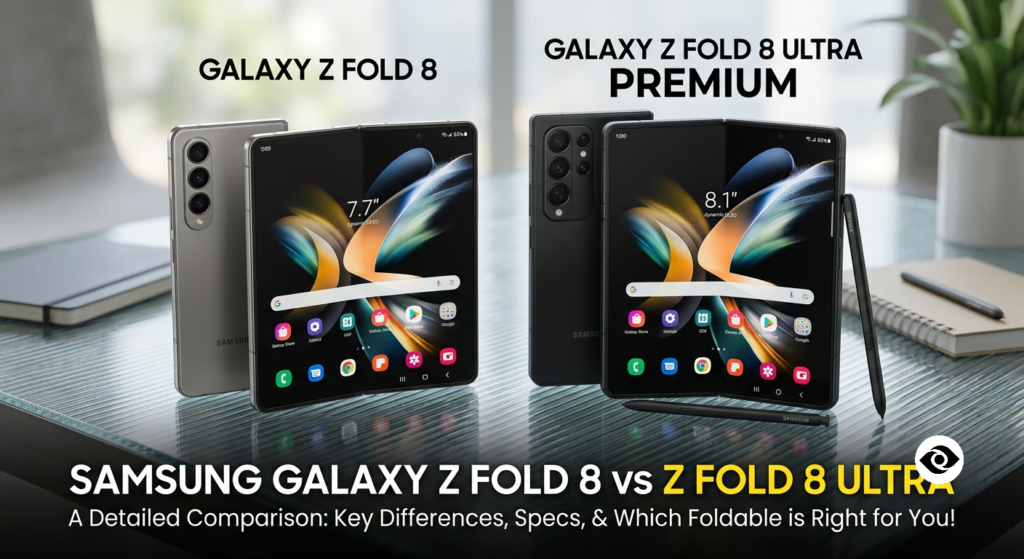
Samsung is completely shaking up its foldable lineup. Rather than releasing a single flagship foldable, Samsung has split its lineup into two distinct models: the mainstream, passport-shaped Galaxy Z Fold 8 and the uncompromising, ultra-premium Galaxy Z Fold 8 Ultra.
Whether you’re deciding which foldable to pre-order or just curious how Samsung plans to redefine the book-style foldable market, here is the breakdown of the 7 biggest differences between the Galaxy Z Fold 8 and the Galaxy Z Fold 8 Ultra.
Quick Comparison: Key Specifications
| Feature | Galaxy Z Fold 8 | Galaxy Z Fold 8 Ultra |
| Form Factor | Shorter & wider (“Passport” style) | Tall & sleek (Classic book-style) |
| Inner Display | 7.6-inch Dynamic AMOLED (4:3 aspect) | 8.0-inch Dynamic AMOLED (6:5 aspect) |
| Cover Display | 5.5-inch AMOLED (16:10 aspect) | 6.5-inch AMOLED (21:9 aspect) |
| Main Camera | Dual: 50MP Wide + 50MP Ultrawide | Triple: 200MP Main + 50MP Ultrawide + 10MP (3x Telephoto) |
| Battery Capacity | 4,800 mAh | 5,000 mAh |
| Processor | Snapdragon 8 Elite Gen 5 for Galaxy | Snapdragon 8 Elite Gen 5 for Galaxy |
| Max Storage | Up to 512GB (12GB RAM) | Up to 1TB (16GB RAM) |
| Weight / Thickness | 201g / 4.5mm (unfolded) | 218g / 4.1mm (unfolded) |
| Expected Price | ~$1,799 / €1,999 | ~$1,999 / €2,199 |
1. Form Factor & Aspect Ratio: Pocket-Friendly vs. Cinema-Scale
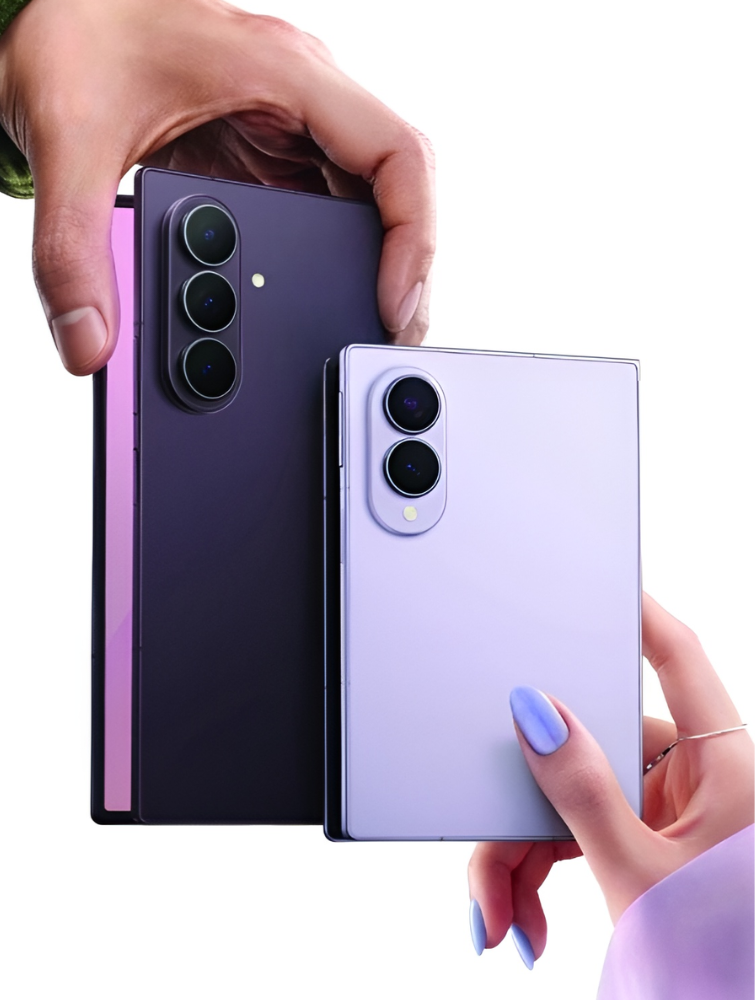
The most immediate difference is the physical shape of each phone.
Galaxy Z Fold 8: Designed with a squatter, wider profile. Unfolded, its 7.6-inch display sports a 4:3 aspect ratio (near landscape native), making widescreen video watching and split-screen multitasking much cleaner. Folded, it stands at just 123.9 mm tall—meaning it fits completely inside front pockets without sticking out.
Galaxy Z Fold 8 Ultra: Retains the tall, slender book-style footprint (158.4 mm tall). It opens to an expansive 8.0-inch main screen with a 6:5 ratio, delivering a traditional tablet feel for productivity and document reading.
Key Takeaway: If pocketability and landscape video consumption matter most, the base Fold 8 wins. If maximum screen real estate is your goal, the Ultra takes the crown.
2. Camera Systems: Dual setup vs. 200MP Pro Photography
If photography is high on your priority list, the camera setup creates a clear line of separation. *
Galaxy Z Fold 8: Equipped with a dual-camera module—a 50MP primary sensor and a 50MP ultra-wide lens. It lacks a dedicated telephoto lens, relying on high-resolution sensor cropping for zoom.
Galaxy Z Fold 8 Ultra: Steps into true flagship territory with a 200MP main camera (1/1.3-inch sensor) inherited from Samsung’s S Ultra line, paired with a 10MP 3x optical telephoto lens and an upgraded 50MP ultra-wide lens.
The Ultra delivers four times the resolution on its primary sensor, dramatically superior low-light performance, and actual optical optical zoom flexibility.
3. Battery Capacity & Charging Efficiency
Foldables demand significant power to drive two high-refresh-rate displays. Samsung upgraded both models to next-generation Silicon-Carbon (Si/C) battery tech:
Galaxy Z Fold 8: Houses a 4,800 mAh battery. Combined with its slightly smaller displays, it easily delivers full-day battery life.
Galaxy Z Fold 8 Ultra: Features a larger 5,000 mAh battery to power its massive 8.0-inch inner panel.
Both models support 45W wired charging and wireless charging.
4. Cover Screen Usability
The outer screen dictates how usable a foldable is when closed.
Z Fold 8 Cover Display: Measures 5.5 inches with a 16:10 aspect ratio. It feels like a wider, standard compact smartphone rather than a narrow TV remote, making typing one-handed surprisingly natural.
Z Fold 8 Ultra Cover Display: Measures 6.5 inches with a 21:9 aspect ratio. It offers a traditional smartphone experience with a narrower grip (72.8 mm) that feels sleek in the hand.
5. Memory & Exclusive 1TB Storage Tier
Power users who store heavy media files, 4K videos, or large local datasets will notice a storage restriction on the standard model.
Galaxy Z Fold 8: Available in 12GB RAM configurations with either 256GB or 512GB of UFS 4.0 storage.
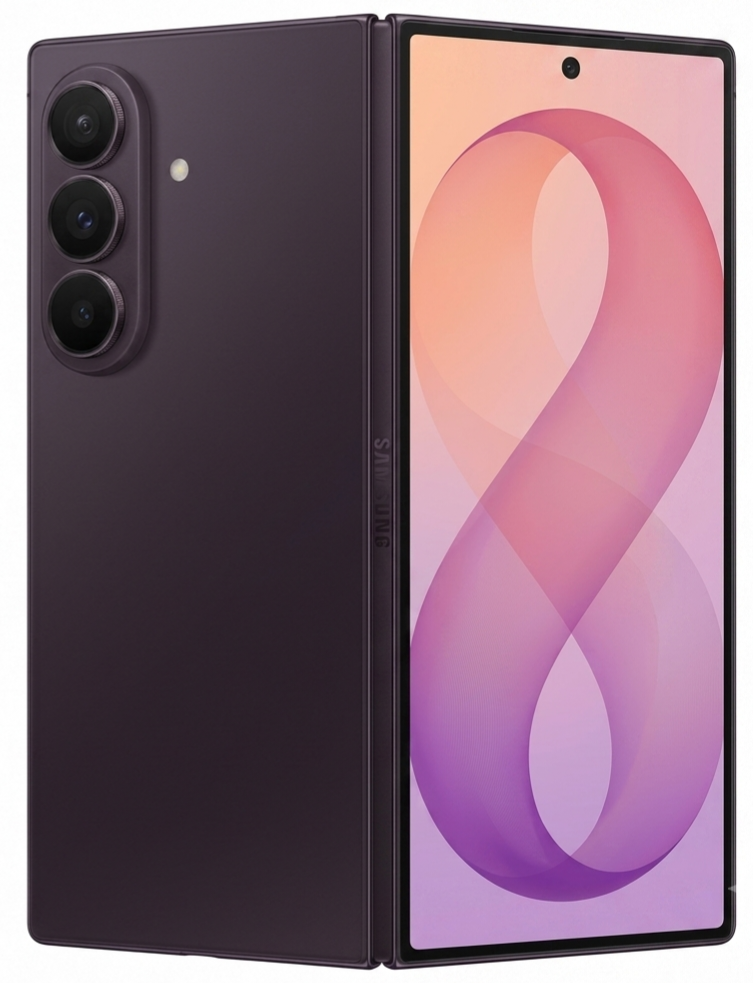
Galaxy Z Fold 8 Ultra: Offers 256GB and 512GB options, but adds an exclusive 16GB RAM + 1TB storage variant.
6. Software & Camera Innovations: “Mirror View” & Pen Support
Both phones run One UI 9 on top of Android 17, powered by the Snapdragon 8 Elite Gen 5 for Galaxy chipset, but the Ultra gets exclusive camera capabilities:
Mirror View: Debuting in One UI 9, this camera software feature takes advantage of the Fold 8 Ultra’s advanced sensor array to offer dual-screen live preview modes and enhanced selfie tracking.
Flex Titanium Substrate: Both models utilize Samsung’s new Flex Titanium display substrate—replacing plastic support layers beneath the OLED panel with titanium alloy film. This reduces air gaps and makes the inner crease nearly invisible on both phones.
S Pen Support: The Ultra maintains full digitizer support for S Pen precision input across its expanded 8.0-inch canvas.
7. Price Point & Value Proposition
Samsung has structured its pricing to reflect the distinct audiences for each phone:
Galaxy Z Fold 8: Expected base price starts around $1,799 / €1,999 (~₹1,55,000). By trimming the camera zoom hardware and narrowing the outer footprint, Samsung offers a lighter (201g), more accessible entry point to book-style foldables.
Galaxy Z Fold 8 Ultra: Expected base price starts around $1,999 / €2,199 (~₹1,75,000+). You’re paying a ~$200 premium for the 200MP camera system, 3x telephoto zoom, larger 8.0″ screen, bigger battery, and 1TB storage eligibility.
Final Verdict: Which One Should You Buy?
Choose the Galaxy Z Fold 8 if: You want a light (201g), ultra-pocketable foldable with a landscape-friendly inner display for watching videos, a wider cover screen for easier typing, and want to save ~$200.
Choose the Galaxy Z Fold 8 Ultra if: You refuse to compromise on mobile photography (demanding a 200MP sensor + 3x telephoto), need an enormous 8.0-inch canvas with S Pen support, or require 1TB of local storage.